Service
Concrete Pumping
A concrete truck can only pour as far as its chute reaches. When the slab is in the backyard, behind a narrow side gate, up a steep driveway, over a house or on an upper level, concrete has to be pumped to where it's needed. Pumping also speeds up large pours and reduces the barrowing that can wear out a crew and churn up gardens. Rowville Concrete organises line and boom pumping as part of concrete jobs across Rowville and the surrounding suburbs, choosing the pump that suits the site, the volume and the access.
Line pumps and boom pumps
Line pumps
A line pump is a trailer- or truck-mounted pump that pushes concrete through a flexible hose laid along the ground. The hose can run down side paths, through gates, across gardens and around corners. Line pumps suit:
- •backyard patios, paths and shed slabs;
- •garage floors and extensions behind existing houses;
- •pool surrounds and footings where access is narrow;
- •smaller pours where a boom would be oversized.
Line pumps usually need a suitable mix for pumping, and the hose run is planned to protect paths, lawns and garden beds along the way.
Boom pumps
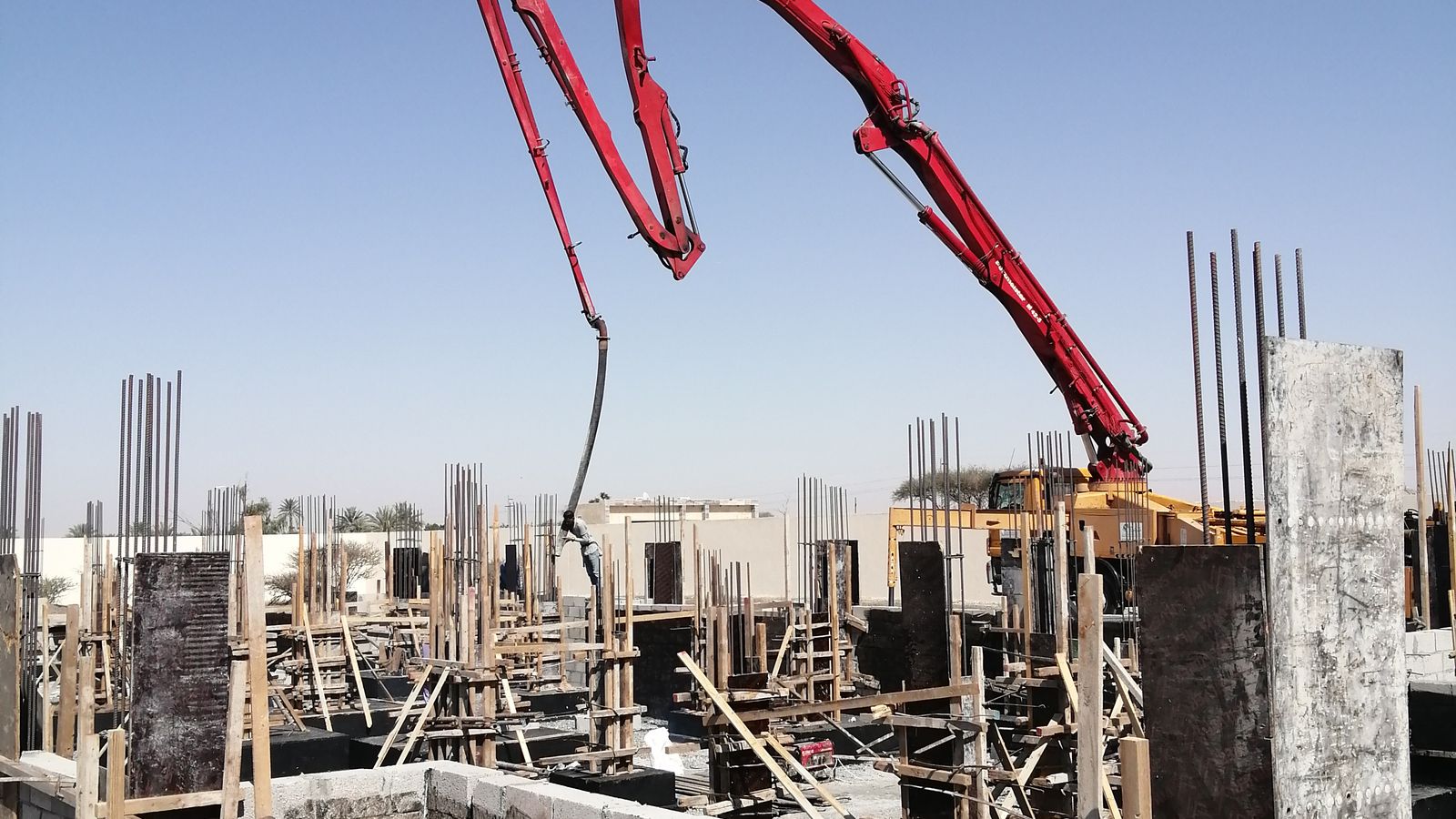
A boom pump is truck-mounted, with a folding, articulated arm that places concrete from above. The boom can reach over houses, fences and obstacles, then position the hose exactly where the concrete is needed. Boom pumps suit:
- •house slabs and multi-unit sites with large volumes;
- •pours over existing buildings or into areas trucks can't reach;
- •upper-level slabs and suspended decks;
- •sites where laying a long hose on the ground isn't practical.
Boom pumps need a stable, level set-up area and enough space for outriggers, as well as clearance from overhead powerlines and trees.
Why pumping can make sense
- •Access. Concrete can reach places a truck can't, without widening gates or crossing lawns with barrows.
- •Speed. Faster placement helps on larger pours and in hot or windy weather, when concrete stiffens faster.
- •Quality. Placing concrete continuously, close to its final position, helps keep the mix consistent across the pour.
- •Less site damage. A hose or boom avoids repeated barrow runs over lawns and paths.
- •Crew safety. Less heavy barrowing reduces strain on workers.
Planning a pumped pour
Every pumped pour needs some planning:
- 01Site access. Where will the concrete truck and pump park? Is there room for the truck to back up to the pump hopper?
- 02Council and road use. Pumps and trucks parked on the street may need council permission or traffic management, particularly on busy roads. Parking restrictions and nature-strip protection are also considered.
- 03Overhead hazards. Powerlines, trees and building eaves near the pump or boom path need to be identified. Working near powerlines has strict safety requirements.
- 04Hose route or boom reach. For line pumps, the route is measured and protected. For booms, the reach and set-up position are checked.
- 05Mix design. The concrete supplier batches a mix suitable for pumping and for the job's specification.
- 06Timing. The pump, trucks and crew are booked to arrive in the right order.
Pumping for different jobs
- •Slabs. House, extension, garage and shed slabs often use pumping. See house slabs, extension slabs, garage slabs and shed slabs.
- •Outdoor living. Backyard patios and pool surrounds are commonly pumped through side access. See concrete patios and pool surrounds.
- •Retaining wall footings. Post footings in hard-to-reach spots. See concrete sleeper retaining walls.
- •Multi-unit sites. Several slabs across a tight infill block. See multi-unit and townhouse slabs.
Sloping and tight blocks
Sloping blocks in the foothills suburbs, such as Ferntree Gully, Boronia and parts of Endeavour Hills, and narrow side access on established streets throughout Rowville, Wantirna South and Glen Waverley, are situations where pumping is often the practical option.
Pumping as part of the job
We generally arrange pumping as part of a concrete job rather than as a standalone service, so the pump choice, mix, timing and crew are planned together. For formwork and steel preparation before a pumped pour, see formwork and steel reinforcement. All builder-focused services are on the commercial and formwork hub.
Where we quote
We quote pumped concrete jobs across Rowville, Scoresby, Mulgrave, Narre Warren North, Wheelers Hill and the other suburbs on our locations page.
Concrete pumping FAQs
If the concrete truck can't get its chute close to the pour, or barrowing would be slow or damage the site, a pump is usually worth considering. We'll assess access at the site visit.
A line pump pushes concrete through a hose laid on the ground. A boom pump uses a truck-mounted arm to place concrete from above. Line pumps suit smaller, ground-level jobs. Booms suit larger pours and jobs over obstacles.
Hoses are laid carefully and protected where they cross surfaces. Pumps and trucks are positioned to avoid damage where possible. We'll discuss protection for delicate areas.
It depends on the council, the road and the set-up. Some situations need permission or traffic management. We check this when planning the pour.
A boom pump can often reach over a single-storey house, depending on the boom size, set-up position and overhead hazards. We check reach during planning.
Related services
All commercial & formwork → · House slabs → · Pool surrounds →
Service areas
Rowville · Scoresby · Mulgrave · Narre Warren North · Wheelers Hill · Ferntree Gully · See all service areas →
Get a quote for a pumped pour
Tell us what you're pouring and describe the access, or send photos of the path from the street to the pour. We'll recommend the right pumping approach and give you a written quote.